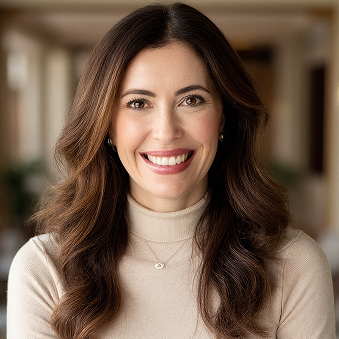

Dr. Rachel Rubin, Spark’s CEO and founder, knows this story well.
A family comes in for a transfer admissions consultation. Their child worked hard for four years to earn strong grades, participate in meaningful activities, and attain a genuine record of achievement. But when they applied to their top-choice schools, they didn’t get in. And now, sitting across from her, they use a word she often hears in this line of work: “random.”
“I’m confident that if I looked at their child’s application for just two minutes, I could tell you exactly why they weren’t accepted, and what colleges would have wanted to see instead,” says Rubin. “But to families, the process just feels so haphazard and unfair.”
Rubin understands that reaction. But after more than 15 years in the field — and years before that spent doing doctoral research on admissions and financial aid at Harvard — her view is firm: the process is far more legible than it appears.
“College admissions is an extremely data-driven process, and admissions officers are good at reading between the lines of your application.”
The Myth of Admissions Randomness Benefits Everyone But You
The idea that admissions is arbitrary tends to come from two places.
First, sensational stories in the media reinforce the anxiety families already feel to keep them reading.
Then, the colleges themselves muddy the waters. “If it were really clear to families who would get in and who wouldn’t,” Rubin explains, “these schools wouldn’t have nearly as many people applying.” Opacity maintains competition, keeps acceptance rates low, and serves institutional interests like boosting the yield rate (the number of accepted students who ultimately choose to attend). Colleges, Rubin argues, have few incentives to make their criteria fully transparent.
Neither dynamic is a conspiracy. But both leave families reacting to the process rather than understanding or leveraging it.
That misunderstanding can show up in small but important ways. For instance, parents worry that their child doesn’t play a sport or an instrument, when colleges, per Rubin, “actually don’t care about that.” They’d much rather see students invest that time in a genuine passion and develop real depth in a field of interest.
Similarly, when families hear about their child’s high-achieving peers being rejected, they somewhat naturally conclude that the system is arbitrary. But of course they have no knowledge of what those students’ applications contained or how they would have been read by admissions officers.
Dr. Rubin, instead, has reached clear conclusions about the admissions process through meticulous research. Her doctoral work at Harvard focused on large-scale longitudinal studies of admissions and financial aid policy, giving her a direct view into how the system operates in practice… and how it is commonly misinterpreted. That work ultimately led her to found Spark Admissions.
“I really wanted to make clear to my students that this process is much more legible than they might think,” she says.

What Colleges Want Is Not a Mystery
Much of the confusion, Rubin says, comes from how families interpret what they’re seeing rather than from a lack of information.
Take leadership as an example. Admissions officers consistently look for students who lead: presidents, captains, founders, the people others turn to. Families might recognize that that’s the case, but they will then perceive leadership as simply a box to check. But what students accomplish in these roles matters much more than the title itself. Colleges want to see students do something meaningful with their newfound authority rather than merely announcing it.
Rubin points out that leadership is a meaningful predictor of how students will perform in the workplace, in relationships, and in teams. “The fact that colleges are looking for presidents or vice presidents or captains is actually something that, as parents, we want too,” she says. “We want our children to develop in a way that others look to them, that they feel confident in their decision-making, that they can eventually lead teams.”
Seen this way, the expectation of leadership in selective admissions isn’t arbitrary. It reflects something real and genuinely desirable.
The same pattern shows up in community service. One-off volunteering, Rubin notes, doesn’t carry much weight. “Colleges don’t care if you did a beach cleanup one day and a food drive the next,” she says. “What they’re looking for is a strong, multi-year investment of time in a community that actually needs you.”
That kind of sustained commitment to a particular organization or effort signals something harder to manufacture: empathy, follow-through, and perspective beyond a student’s immediate environment.
Over time, Rubin has found that what colleges consider most appealing in a candidate often overlaps with what families say they value most: personal depth, consistency, and a sense of direction.

The Research Behind the Reassurance
Rubin’s background is in education research. She spent years at Harvard studying admissions and financial aid policy, working with national datasets, and eventually serving on a doctoral admissions committee. That training informs how Spark approaches its work.
“A combination of data and emotion should drive decision-making,” she says. “I’m not comfortable giving a suggestion without feeling confident it’s truly the best approach.”
At Spark Admissions, that outlook translates into tracking outcomes over time, refining guidance based on what proves effective, and treating each application as both a human story and a strategic exercise. The goal isn’t to reduce students to data, but to ensure that decisions are grounded in more than instinct.
It’s a pragmatic approach, one that is less about publishing research and more about applying it carefully and consistently.
“College admissions actually isn’t a random system,” she says. “It’s very clear about what it wants. And the team at Spark has spent years learning exactly how to read it.”
What All This Means for Your Family
If the admissions process has a logic to it, then it can be understood. And if it can be understood, then families can prepare